NEWS & EVENTS

NEWS & EVENTS
Multilevel Integration Revitalizes Western Beijing: The Transformation and Renewal of the Pingguoyuan Transport Hub
On December 30, 2025, Beijing’s largest urban passenger transport hub to date—the Pingguoyuan Transport Hub—officially began operations. On February 2, 2026, the integrated development area, including commercial and office functions, fully passed final completion acceptance. After 20 years of preliminary research, design and construction, the project team from the Urban Design Institute of UCD witnessed the transformation of this mega transit-oriented development (TOD) complex, with a floor area of around 298,000 square meters, from a “traffic core” into a true “urban core”.
This marks not only a major milestone in the capital’s transport infrastructure development, but also the official entry of western Beijing into a new phase of “station-city integration and multilevel growth”. A new landmark in western Beijing that reshapes the urban pattern and boosts regional development has now fully emerged.
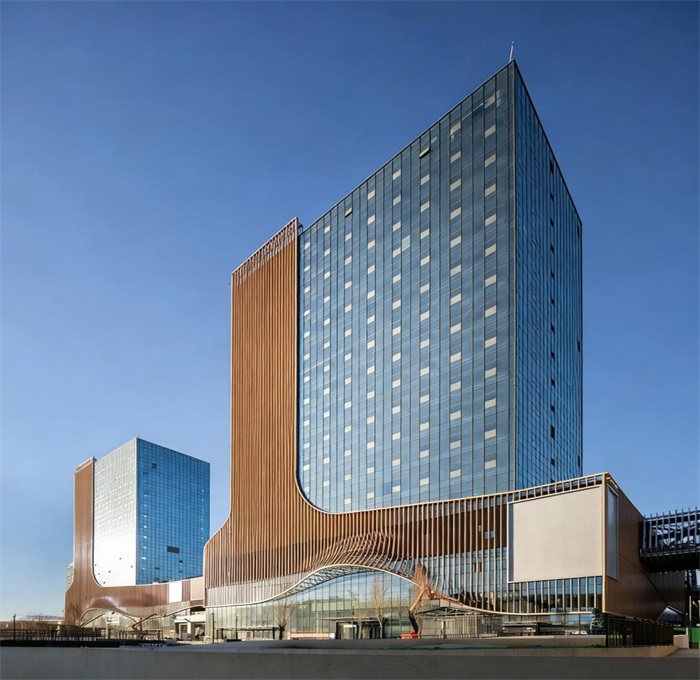
Strategic Empowerment: From Transport Node to Gateway to Western Beijing
An upgrade from a node to a center. In the early 21st century, the original Pingguoyuan Station, then the western terminus of Beijing Subway Line 1, long struggled with limited functionality, constrained space, and inefficient transfers, making it increasingly unable to meet the development positioning and practical needs of western Beijing. As the Beijing-Tianjin-Hebei coordinated development strategy has advanced, western Beijing has urgently required a strong engine capable of integrating transportation, industry, and public services. In response, Beijing and Shijingshan District set out clear goals to improve traffic efficiency, unlock regional value, and upgrade urban functions, and position western Beijing as a regional sub-center, a transport hub, and a core for financial and commercial services. The newly completed Pingguoyuan Transport Hub represents a systematic answer to this historic challenge. It is no longer merely the end of a rail transit line, but a vital link between the city center and Mentougou District, and also a “gateway to western Beijing” that drives the flow of talents, capital and industries westward.
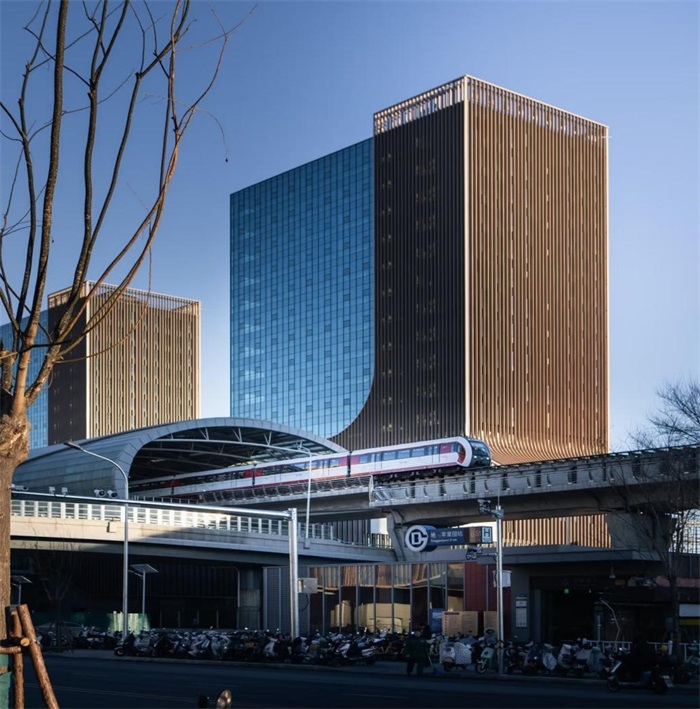
A dual-core-driven, mixed-use complex. The Pingguoyuan Transport Hub is powered by two cores: a “traffic core” and an “urban core”. The “traffic core”, with a floor area of around 152,200 square meters, comprises the transport hub and rail transit spaces, forming the foundation of traffic efficiency. The “urban core”, with a floor area of about 146,500 square meters, integrates commercial, office, and other functions, serving as the source of regional vitality. This deep integration of “hub + city” enables the Pingguoyuan Transport Hub to transcend the functional limits of traditional transport infrastructure. It stands as a model of Beijing’s evolution in integrated transport hubs from “single-purpose hub” to “hub + development” and onward to the “Hub 3.0”. It also offers a replicable, scalable “Beijing model” for the development of integrated transportation hubs both in the capital and across the country.
Multilevel Integration: Reshaping Multidimensional Spatial Value
Multidimensional symbiosis: a trio of underground, ground-level, and elevated functions. It creates a three-dimensional urban ecosystem of underground commuting, ground-level transfers, and elevated consumption. The underground level connects rail transit with parking systems; the ground level integrates bus interchanges with commercial entrances; and the elevated level accommodates offices and leisure amenities. They together form an all-weather, vertically integrated urban living environment.
Dual-core coordination: a smart layout for balanced passenger flow. The hub adopts a dual transfer core layout of “North: M1 + Conventional Bus” and “South: S1 + Bus Rapid Transit”. The north zone primarily serves commuter flows to and from the city center, while the south zone efficiently connects with medium- and low-speed maglev lines and bus rapid transit (BRT) systems. Functioning like the hub’s “two ventricles”, the two zones effectively balance north-south passenger pressure and enable swift dispersal and smooth, comfortable transfers.
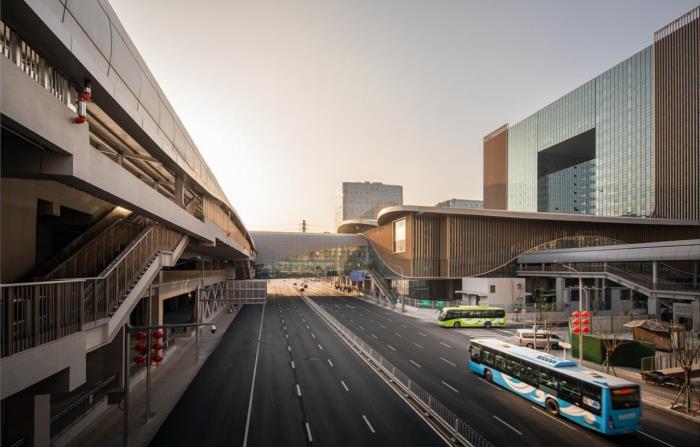
Pedestrian-friendly design: weaving an elevated walking network. The light, airy sky corridor and convenient underground passages seamlessly stitch together fragmented urban spaces. With the integrated hub as its anchor, the network systematically links surrounding commercial complexes and functional plots, including Joy City, Pingguohui, and the CRCC Innovation Tower, and creates a weather-protected, pedestrian-friendly system. This, in turn, helps activate street commerce and foster diverse social scenes.
Intensive development: an innovative paradigm for maximizing spatial efficiency. Within a limited construction site of about 4.23 hectares, the project pioneers a model of “multi-functional integration and layered vertical development”. Moving beyond simple functional stacking, it establishes a systematic approach that leverages vertical space to enhance urban efficiency. Through full life-cycle coordination spanning planning, investment, construction, and operation, functions such as transportation, commerce, office, and public services are organically embedded across different levels. This greatly improves land use efficiency and offers a forward-looking model for high-density megacities seeking to overcome tight land constraints in their core areas.
Efficient Connectivity: An Intelligently Coordinated Organism
Efficient transfer: a seamless experience through the integration of seven networks. The hub’s core area adopts an intensive development model that brings together seven transport networks: rail transit (Lines M1, M6 and S1), BRT, conventional buses, taxis, a park and ride (P+R) system, a slow-traffic system, and the urban road network. These modes intersect in a three-dimensional, fully integrated manner, like a highly efficient and precise transfer engine, reorganizing passenger flows of different directions and speeds. The result is a qualitative leap from “multiple networks coexisting” to “one seamlessly connected system”.
Eighteen conventional bus routes, together with one forthcoming BRT line, are dynamically scheduled through a data platform, thus upgrading bus services from “fixed supply” to “dynamic response”. The project also provides 400 P+R parking spaces, 590 spaces for development use, and 1,250 non-motor vehicle spaces. In coordination with surrounding resources, it establishes a shared parking system that meets the needs of diverse users.
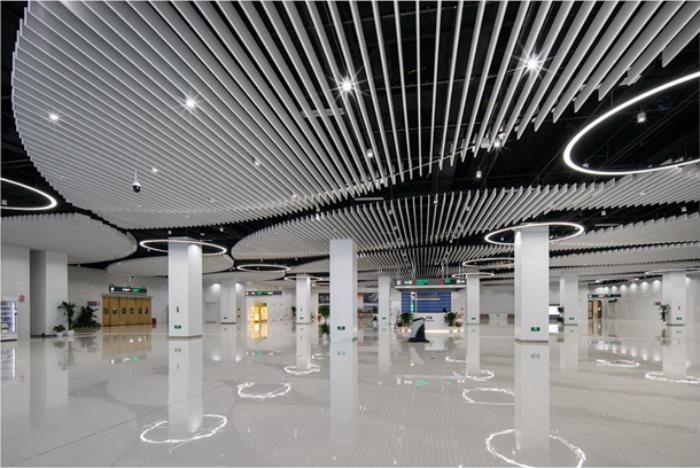
A smart hub: a digital brain for system-wide coordination. The project has established a full life-cycle smart operation platform that functions as the hub’s “digital brain”. Through unified management, it enables efficient coordination across systems, supports cross-system intelligent dispatching and emergency response, and ensures safe, smooth operations at all times. The platform also provides passengers with convenient, multi-terminal services. Via mobile phones and navigation screens, users can access real-time information and receive seamless guidance throughout their journey. A VR-based in-station navigation system built on real-scene 3D mapping overcomes the limitations of traditional 2D navigation, allowing users to easily and intuitively find transfer routes or desired shops within complex, three-dimensional spaces. Meanwhile, an AI-powered video parking guidance system supports space reservation, vacancy detection, and vehicle location, which makes parking and leaving more efficient and effortless, enhancing travel experience comprehensively.
Green Innovation: A Masterpiece of Meticulous Craftsmanship
Precision engineering within an operating rail network. The site is densely interlaced with operating lines including Subway Lines 1, 6 and S1, and the Jingmen Railway, so all works have to be carried out under stringent conditions that ensured absolute rail safety and uninterrupted services, like performing delicate surgery beside the city’s “beating heart”. To meet this challenge, the design adopts highly tailored structural solutions. In the north zone, the expanded underground station is built in close proximity to, yet separated from, the existing station, with elastic, damping cushion layers that limit deformation of the existing station structure to the millimeter scale while effectively blocking the upward transmission of train vibration force. In the central zone, the BRT platform employs a 52-meter long-span truss that flies over existing tunnels, with a view to achieving zero load transfer. In the south zone, underground spaces are proactively set back to reserve safe clearance for diagonally crossing rail lines. Through this series of meticulously engineered structural designs, the grand new architecture coexists harmoniously with the city’s sensitive lifelines, exemplifying engineering ingenuity in the pursuit of perfection.
A low-carbon model that breathes with nature. The development meets China’s Two-Star Green Building Standard. Its external facade widely employs triple-glazed, double-cavity Low-E curtain walls, which can deliver high-performance thermal and acoustic insulation and significantly reduce energy consumption. In high and large spaces such as the commercial atrium, an innovative stratified air-conditioning system directs supply air to occupied zones, thus improving energy efficiency. Full air systems and fan coil units with fresh air are deployed by function to enable precise temperature control and efficient operation. In addition, high-efficiency variable-frequency HVAC systems work in tandem with smart fresh-air controls to ensure superior indoor air quality. A rainwater harvesting system enables the reuse of collected rainwater for landscape irrigation and site cleaning.
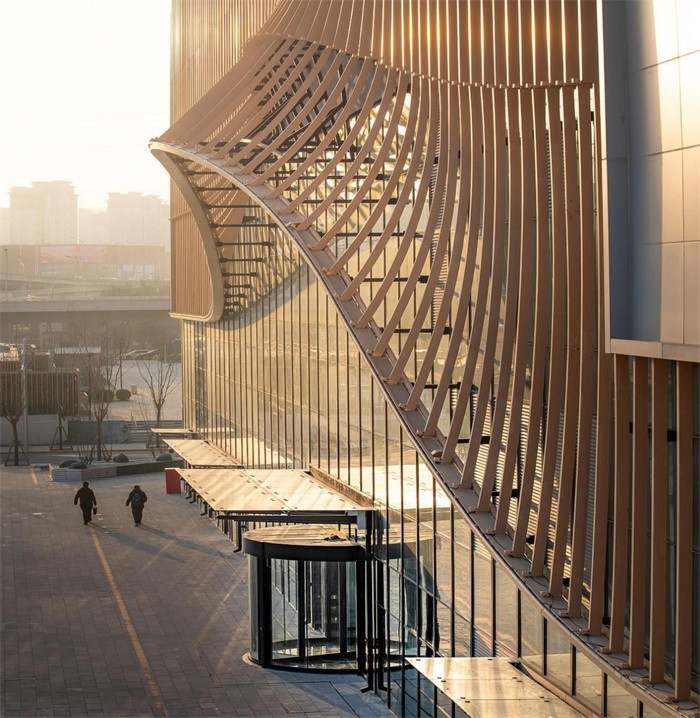
Human-centered aesthetics and experience infused into space. Built on a robust engineering foundation and green technology, the design brings a distinctive aesthetic vision and human warmth, making the “station-city integration” experience truly resonate. The office spaces are conceived around a sense of lightness, which is graceful and fluid; the building facade resembles a soft, diaphanous veil, creating an elegant and contemporary visual image. This “lightness” goes beyond physical form to embody a unique cultural attitude and aesthetic standard, offering users a calm, refined psychological oasis amid the pace of efficient business. Public areas such as lobbies and elevator halls employ inventive forms and new eco-friendly materials to deliver high-quality, artful spaces that balance human care with aesthetic value.
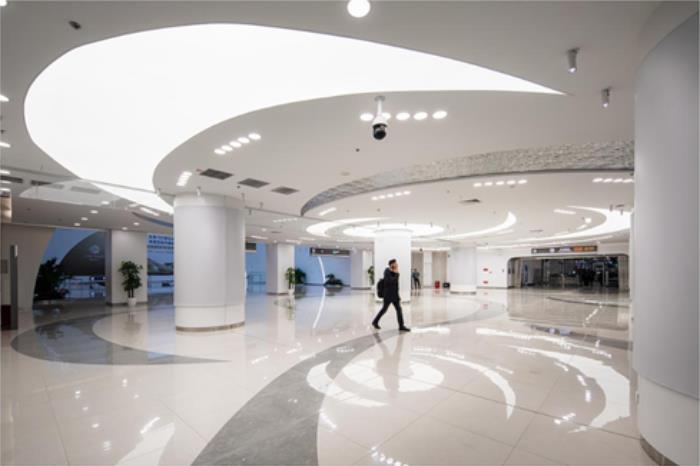
The commercial and transfer hub spaces adopt the theme of “A Trip to the Orchard”, transforming Pingguoyuan’s local context into an immersive spatial narrative. Five sequential scenes, i.e., Luxuriant Spring, Brilliant Bloom, Fragrant Valley, Lush Orchard, and Renewal, weave together the bus terminal, commercial areas, and rail transfer zones into a unified “orchard trip” experience. Abstract artistic forms and fluid circulation routes turn commuting and shopping into a stroll through an art gallery, thereby creating a distinctive landmark and memorable identity for the Pingguoyuan area.
At present, the Line M1 upgrade is progressing steadily. Once the three lines are fully interconnected, links between western Beijing and the city center will become even closer. Leasing for the commercial and office areas has already begun, and the smart parking facility will soon be operational. This “vertical city” grown from the rail transit is steadily unlocking integrated transportation, economic and social value.
It is not only an efficient transport hub, but also an urban engine that attracts talents, fosters sectors, and integrates everyday life. Through innovative station-city integration, it gives new impetus to Beijing’s efforts to play its role as the national political center, cultural center, center for international exchanges, and center for technological innovation, and drives western Beijing toward higher-level development. The story here is one of integration and growth, marking a city’s steady stride toward the future.